UX ResearchWearables
Designing Wearable Technology for Older Adults to Minimise Perceived Stigma
A qualitative study exploring what design factors of wearables for older adults (80+ years old) cause stigma, and how to design them in a way to promote wear time.
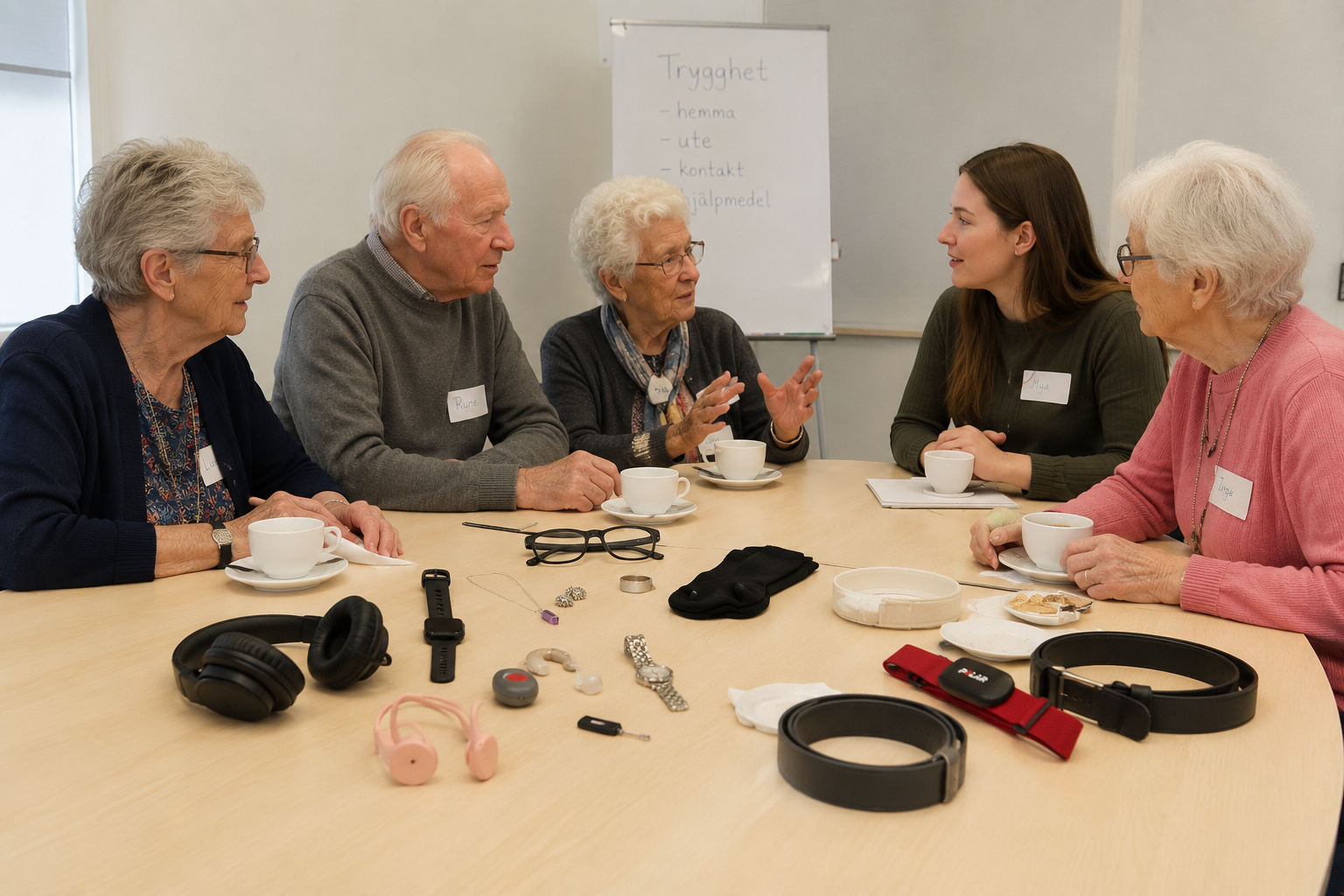
Overview
This ongoing master's thesis explores how wearable technology can be designed to reduce perceived stigma among older adults. Through an iterative human-centered design process, the project combines qualitative research and prototype evaluation to develop evidence-based design recommendations.
Process (still ongoing)
- 1Pre-study to understand current literature and where wearable-related stigma arises in older adults.
- 2Recruited 22 adults aged 80+ for exploratory workshops.
- 3Transcribed and analysed 12 hours of workshop recordings to render design recomendations.currently working here
- 4Designed and built prototypes of wearables.
- 5Evaluated the developed wearables with 10 participants.
- 6Analysed the individual interviews and gathered the final design recommendations.
Key insights, outcome & reflection
This project is still in progress — insights, outcomes, and reflections will be shared once the research is complete.